15 February 20265 min readby Carrotly
Why we grow little AI products instead of one big platform
A short manifesto about why Carrotly is four separate small products instead of one big AI suite — and why that means independent billing, independent teams, and slower roadmaps that aren't sorry about it.
A fair question we get asked, usually by people who are trying to slot us into a familiar shape, is: why isn't Carrotly one product? Why four separate ones, with four separate logins, four separate billing inboxes, four separate websites? Wouldn't it be tidier as a single suite?
Probably. But tidier isn't the goal. This is the long answer to why.
We didn't set out to build a platform.
Carrotly was registered in Singapore in 2022 as a place to put small software experiments. We had one product at the time. Then a second, that solved a different problem for a different kind of person. Then a third. Now four: Aimpress, TooLong.xyz, HeyIsla, and Story Time Together.
At a few different points along the way, the obvious thing to do would have been to merge them: one login, one bill, one settings page, one upsell funnel where someone who came in for video summaries gets nudged toward bedtime stories. That's the textbook move. It's how you get the per-customer revenue number to go up.
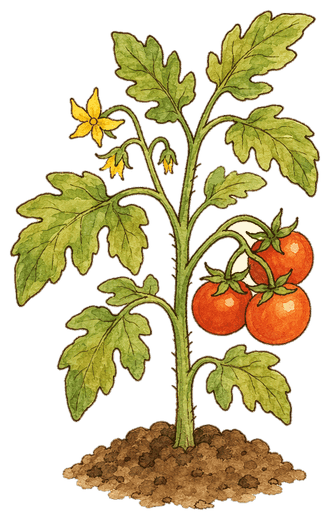
We didn't do it. We've come to think of the company as a garden rather than a factory, and you don't graft a tomato plant onto a sunflower just because they share a plot.
What 'small' means in practice.
Concretely, here is what we mean when we say we keep things small:
- Each product has its own account. You can't log into Aimpress with your HeyIsla password. There is no "Carrotly account". Some of you have asked for one; we keep saying no, politely.
- Each product has its own billing inbox. A refund question on TooLong goes to the same place as a refund question on Story Time Together — billing@carrotly-ai.com — because it's the same company, and one person reads that inbox. But each product handles its own subscription, its own dunning, its own trial, its own renewal email. We don't cross-sell from inside a receipt.
- Each product has its own roadmap. Story Time Together gets quieter, gentler updates around school holidays. Aimpress ships when LinkedIn changes its API, which is not on a schedule. HeyIsla moves slowly on purpose because calendars are unforgiving. The four roadmaps don't have to agree.
- Each product has its own small team. Sometimes one person. Rarely more than two or three. The team that ships a thing is also the team that answers the support email for it the next morning.
This is not a clever architecture decision. It's just what happens when nobody is allowed to take on a project they can't personally maintain.
What we trade away.
Being honest about this matters. Running four separate small products instead of one big one means we don't have, and probably won't soon have, the following:
- A unified dashboard. You can't see "all your Carrotly stuff" in one place. There is no such place.
- Single sign-on across products. No enterprise SSO. No SCIM provisioning. No "log in with your Carrotly identity" — that identity doesn't exist.
- A sales team. If you're a 5,000-seat organisation, we are not the right vendor for you. We won't pretend otherwise.
- Volume discounts across the portfolio. Buying TooLong doesn't get you a discount on HeyIsla. Each one stands on its own price.
- A fast feature roadmap. Two of our products have shipped fewer than ten user-visible features in the last year. We don't apologise for that. The features we did ship, we kept.
We get asked for each of these, regularly. Most of the time the right answer is "not yet" and a small number of times the right answer is "probably never". We try to be clear about which is which.
Why the garden, and not the factory.
The garden metaphor on our homepage isn't a marketing veneer; it's how the company is actually run. A garden has different beds for different things. They share soil and weather and the same gardener, but a basil plant doesn't have feature parity with a strawberry, and that's fine. Some beds are productive year after year. Some get replanted. A few never quite take, and that's also fine.
A factory model would say: pick the most successful product, kill the others, pour all of the people and the marketing budget into one big thing, and try to be the everything-app for, say, content creators, or for parents, or for calendars. That's a reasonable business strategy. It is just not the one we want to run.
The trade we like better is: keep the products small enough that one person can hold the whole thing in their head; keep the company small enough that the people running it still answer the support email; and keep the surface area small enough that we can be honest about what each product does and doesn't do.
It also means that when something doesn't work — a product that doesn't find its audience, a feature that breaks more than it helps — we can stop doing it without it being a corporate event. We just stop. Pull the plant. Try something else next season.
If you're considering us.
The practical implication, if you're evaluating any one of our products: don't expect a "Carrotly" experience. Expect an Aimpress experience, or a HeyIsla one, with its own quirks, its own pricing, and its own opinions. The thing we promise across all four is that the people who built it are reachable, the company is real (CARROTLY PTE. LTD., UEN 202212557Z, registered in Singapore), and the policies that govern every product are the same ones — written plainly, in one place.
That's the manifesto. Small things, grown carefully, with our names on them.
Was this useful? Email us a reply →